Digital skin consultation software is a technology platform that uses AI and machine learning to analyse a client’s skin condition from a facial photograph and generate a personalised skin report with treatment or product recommendations — used by medspas, beauty clinics, and aesthetic practices to automate and standardise the skin assessment process.
Here is a pattern that repeats across medspas and beauty clinics at nearly every stage of growth: the business invests heavily in treatments, equipment, and qualified staff, then loses clients after the second or third visit because the relationship between visits is thin. The client had a good experience, but there is nothing pulling them back — no documented progress, no clear next step, no personalised continuity.
Digital skin consultation software is, at its core, a solution to this relationship gap. When implemented as a genuine clinical workflow tool rather than a marketing novelty, it creates a documented, data-rich consultation record that persists across every visit, every practitioner, and every channel.
Key Takeaway
Key Takeaway: Medspas and beauty clinics that digitise their skin assessment typically reduce consultation time by 20–40% and raise treatment conversion rates by 12–25% — while giving every client a documented reason to return.
The Consultation Problem No One Measures
Most medspa and beauty clinic operators track appointment volume, retail revenue, and sometimes client retention. Very few measure consultation quality — specifically, whether the information gathered during a skin assessment is actually used to drive treatment commitment and rebooking.
The gap is significant. Coherent Market Insights data shows that clinics using AI-powered digital skin assessment reduce consultation time by 20–40% and increase treatment conversion rates by 12–25%. Equally important: the average annual cost savings per clinic from reduced diagnostic inefficiency runs between USD 25,000 and USD 60,000.
20–40%
Reduction in consultation time
12–25%
Higher treatment conversion
$25K–$60K
Annual savings per clinic from reduced inefficiency
The AI skin analysis market reflects this operational shift at scale. The global market was valued at USD 2.13 billion in 2026 and is projected to reach USD 6.30 billion by 2033, growing at a CAGR of 16.8% (Coherent Market Insights).
What Digital Skin Consultation Software Does — and What It Does Not Do
The Diagnostic Layer
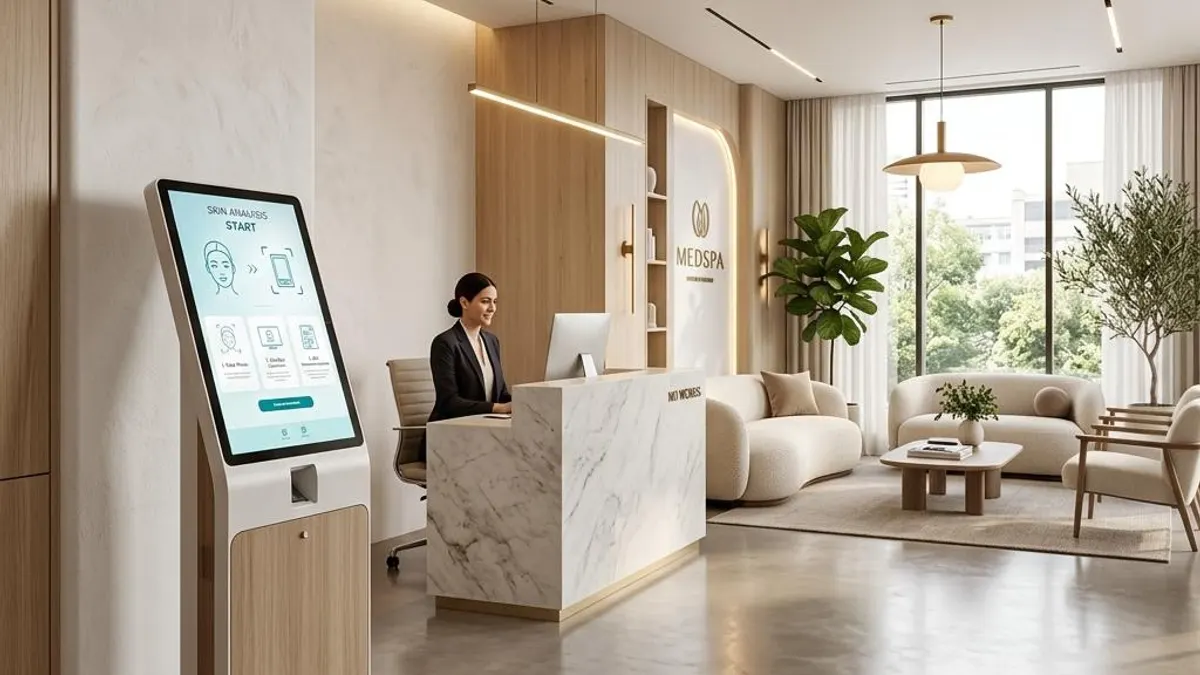
A genuine digital skin consultation platform performs automated skin analysis from a facial photograph captured via smartphone, webcam, or dedicated device. The software processes the image against trained machine learning models and returns a structured report identifying specific conditions — acne, pore size, blackheads, hyperpigmentation, dark spots, dullness, acne scarring, fine lines, wrinkles, and estimated skin age. Platforms like ProSkinScan use facial landmark mapping across hundreds of reference points and analyse the T-zone, U-zone, and cheek areas independently.
Diagnostic AI tools operating in aesthetic and clinical settings now benchmark at 85–94% accuracy across common skin concerns (Coherent Market Insights), with some vendors reporting accuracy up to 98% across more than fifteen skin-health metrics (vendor-reported, as cited by CBA Medicine).
The Recommendation Layer
Diagnostics without recommendations are just reports. The commercial value of digital skin consultation software for a medspa or beauty clinic lies in the ability to map detected conditions to specific treatment protocols or product recommendations tailored to what the clinic offers. Clinic-grade platforms, including ProSkinScan, are designed to restrict and configure recommendations to the specific treatment menu and product lines carried by the business.
The Continuity Layer
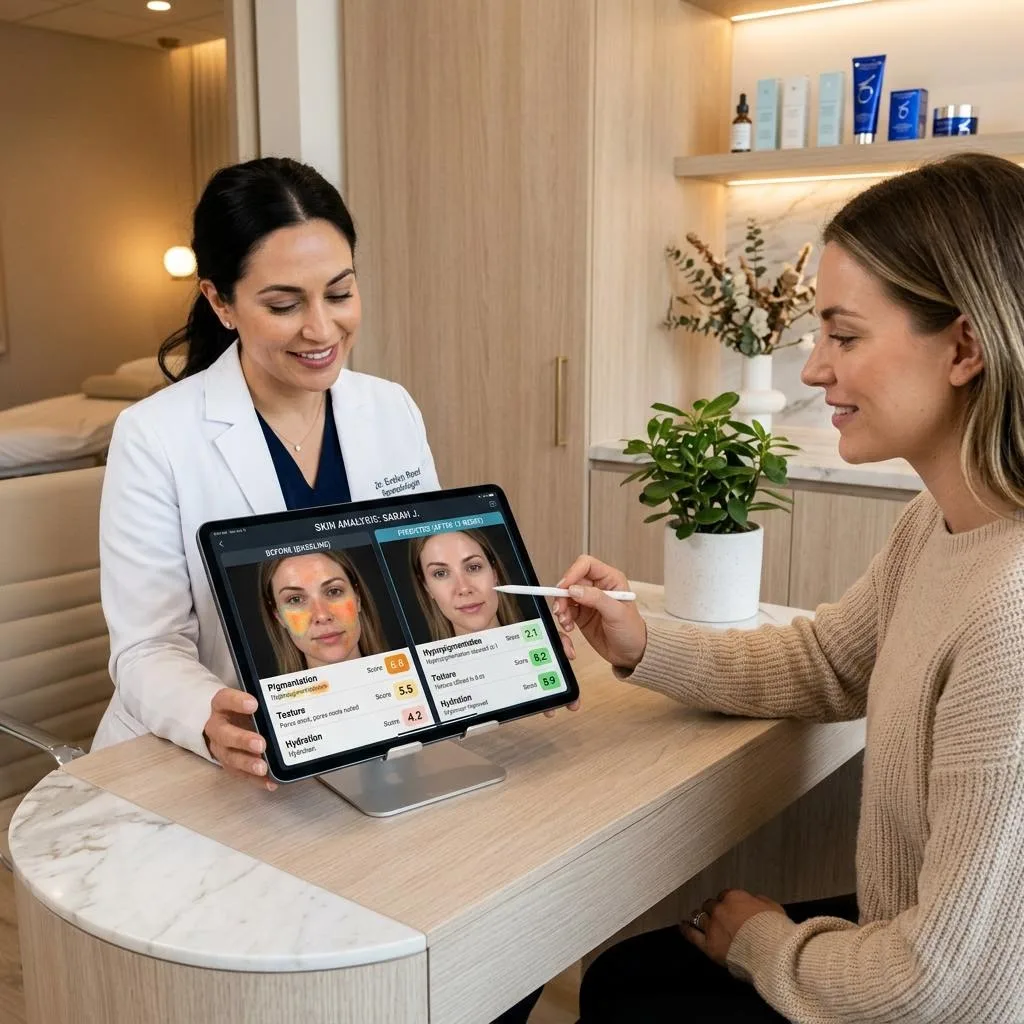
The third functional layer — and the one most directly linked to client retention — is longitudinal skin tracking. Clients who complete a scan at baseline, at the midpoint of a treatment series, and at conclusion can see documented skin improvement over time. Perfect Corp’s documented workflow identifies higher user engagement, stronger client trust, and repeat treatment bookings as the primary outcomes of building progress tracking into the consultation cycle.
Where Medspa Operators Go Wrong: Three Failure Modes
Failure Mode 1: Deploying to Impress, Not to Operate
A surprisingly common pattern is deploying digital skin consultation software as a front-of-house demonstration — something to show new clients that the medspa uses “advanced technology” — without integrating it into the actual consultation workflow. The scan happens, the client is impressed, and then the results are never reviewed during the consultation, never referenced at the next appointment, and never used to frame a treatment recommendation.
Effective deployment means the scan is a trigger, not a parlour trick.
Failure Mode 2: Choosing Software That Cannot Be Configured to Your Menu
Many digital skin consultation platforms are built for cosmetics retail, not clinical services. They are trained to recommend skincare products from a catalogue, not to recommend treatment protocols from a clinic menu. Before selecting any platform, confirm: can the treatment and product recommendations be fully configured to reflect what your clinic offers?
Failure Mode 3: Underestimating Image Capture Quality Requirements
AI skin analysis is only as accurate as the image it receives. The QDerma clinic demo by ProSkinScan provides a clear example of scan capture guidance: clean face, no heavy makeup, good lighting, direct camera angle, full facial visibility.
Smarter Strategy: Building Digital Consultation Into Your Client Journey
Pre-Appointment Scan
Standard intake step, not optional
Visual Presentation
Report shown on-screen, zone by zone
Progress Scans
Milestones built into every package
Step 1: Pre-Appointment Scan as Standard Intake
Issue the skin scan link as part of every new client booking confirmation. Frame it as part of your clinic’s personalised intake process — not optional, not a novelty, but a standard step. PerfectCorp identifies this pre-appointment diagnostic workflow as a driver of both faster consultations and stronger treatment conversion.
Step 2: Visual Consultation Presentation
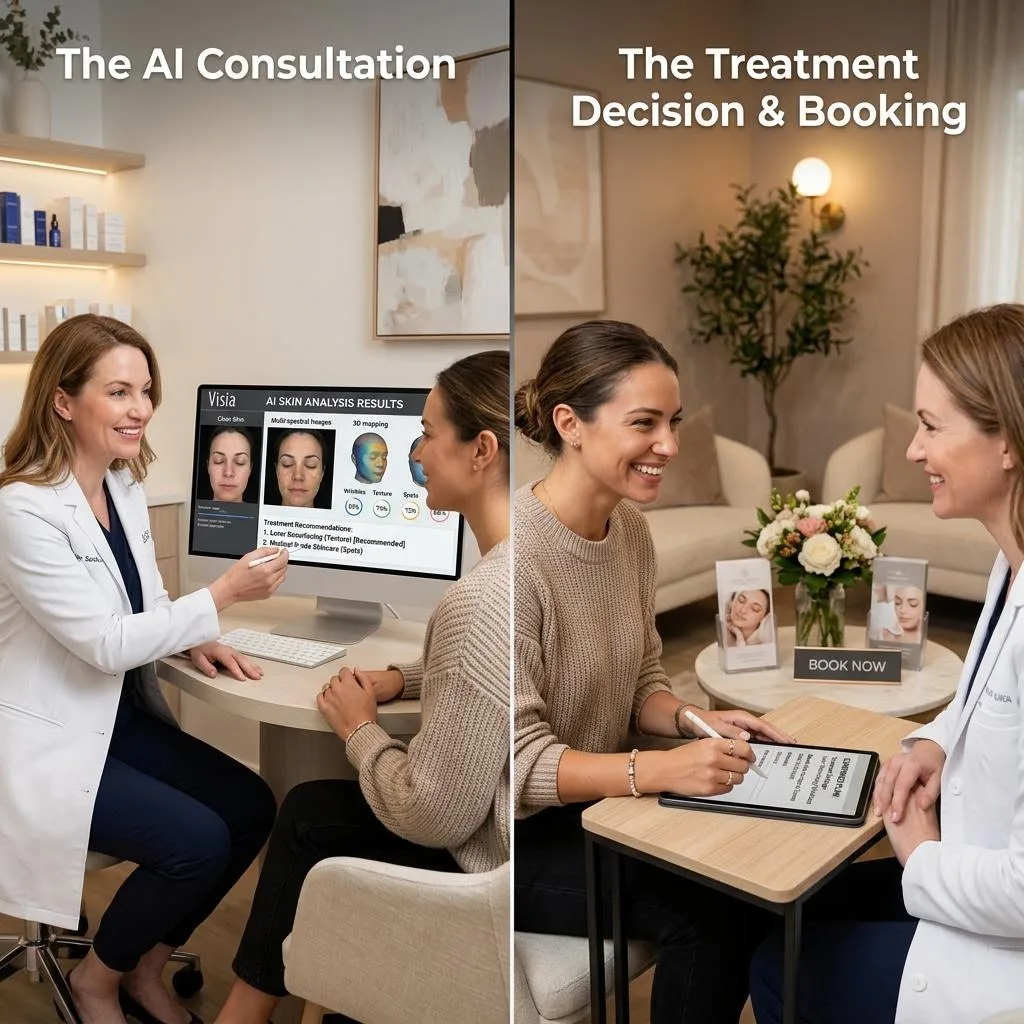
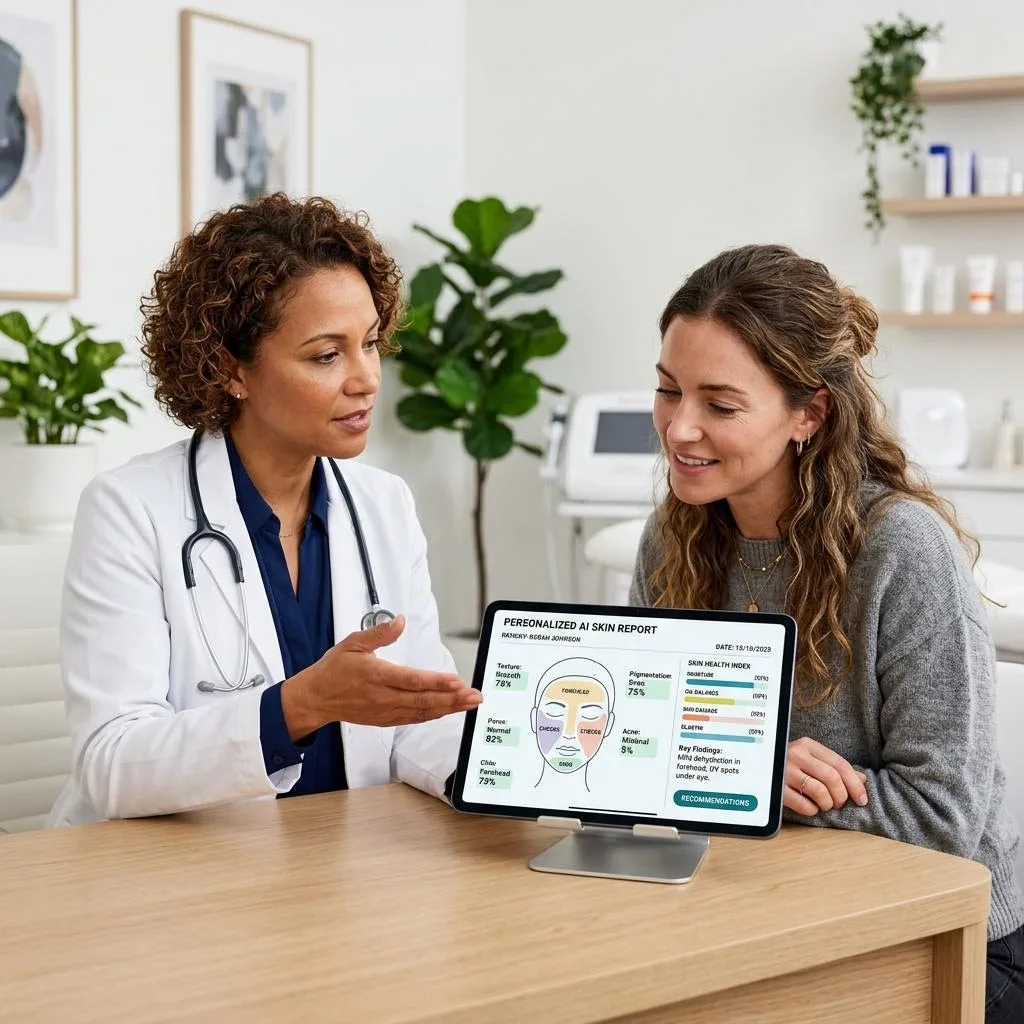
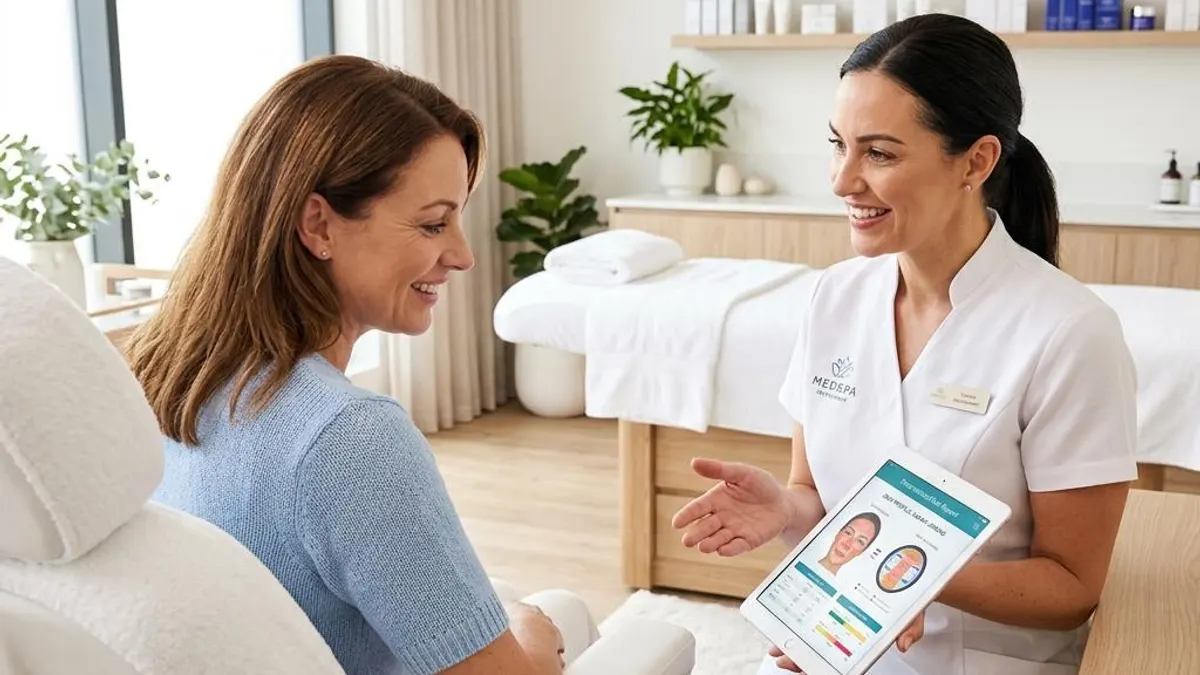
Display the scan report on a shared screen during the consultation itself. Walk the client through their findings — zone by zone, condition by condition. When clients can see their skin data, treatment recommendations shift from prescriptive to collaborative.
Pro Tip
Pro Tip: Build rescans into your treatment packages as formal milestones — e.g. a progress scan at session three. A documented before/after curve is one of the strongest rebooking tools a medspa can own.
Step 3: Progress Scans as Retention Architecture
Build rescans into your treatment packages as formal milestones. Clients enrolled in a six-session skin renewal programme should be rescanned at session one, session three, and session six. The comparative reports become part of the value delivered — something the client owns and can share.
Important
Important: Facial images are sensitive biometric data. Before you sign, verify how your vendor handles image capture, storage, and client consent — and confirm it meets the privacy standards for your market.
Evaluation Criteria for Medspa and Beauty Clinic Operators
Clinical configurability — Can treatment and product recommendations be mapped entirely to your service menu?
Zone-level analysis depth — Does the platform analyse distinct facial zones separately, or does it return a single aggregate skin score?
Image capture flexibility — Does the software work with standard smartphones and webcams, or does it require proprietary hardware?
Longitudinal tracking — Does the platform store and compare scan results over time?
Data privacy compliance — Facial images are sensitive biometric data. Confirm data processing location, storage policies, and deletion protocols before deployment.
Deployment timeline — Building diagnostic AI from scratch takes years (Perfect Corp). Evaluate SaaS and API-based platforms like ProSkinScan for rapid clinic-ready deployment.
FAQ: Digital Skin Consultation Software for Medspas and Beauty Clinics
Q1: What is the difference between digital skin consultation software and a consumer skincare app?
Consumer skincare apps return generalised product recommendations for broad audiences. Digital skin consultation software for clinics is configurable to a specific treatment menu, integrates with clinical workflows, stores longitudinal client data, and is designed for practitioner use.
Q2: Can digital skin consultation happen remotely, before the client visits the clinic?
Yes. This is one of the most commercially valuable use cases. Clients complete a scan from home via a shared link, and the practitioner reviews findings before the appointment begins. PerfectCorp documents this as a driver of faster consultations and higher treatment conversion.
Q3: How does digital skin consultation software support client retention?
The primary retention mechanism is documented progress tracking. Clients who can compare their skin condition before and after a treatment series have visual, evidence-based reasons to continue.
Q4: What skin conditions does digital skin consultation software detect?
Platforms typically detect acne and breakouts, enlarged pores, blackheads, hyperpigmentation, dark spots, skin dullness, acne scarring, fine lines, wrinkles, and estimated skin age. Platforms like ProSkinScan offer zone-specific analysis across the T-zone, U-zone, and cheeks.
Q5: Does digital skin consultation software require expensive hardware?
Most modern platforms work with standard smartphones and webcams. Cloud-based deployment accounts for 66.7% of the current market (Coherent Market Insights) and further reduces infrastructure requirements.
Q6: How long does implementation typically take?
SaaS-based and API-powered platforms can be operational within days to a few weeks. The most time-consuming element is typically workflow integration into the booking confirmation sequence and consultation process.
Q7: Can the software handle both skin and hair analysis?
Select platforms support combined face and hair analysis. The QDerma clinic demo from ProSkinScan supports both AI face analysis and hair concern detection, relevant for clinics offering scalp treatments alongside skin programmes.
See It in Action at a Real Clinic
If your medspa or beauty clinic is evaluating digital skin consultation software, the most direct path forward is a live demonstration in a real clinic context. The QDerma clinic demo shows how AI skin and hair analysis operates in a working aesthetic clinic setting.
To learn more about ProSkinScan’s full AI skin analysis platform for clinics and brands, visit proskinscan.com.