Choosing an AI skin analysis vendor requires evaluating: (1) diagnostic accuracy and training data volume, (2) integration methods available (API, web SDK, mobile SDK), (3) data privacy and HIPAA/GDPR compliance, (4) use-case fit — clinical vs. brand vs. manufacturer deployment, (5) customisation and white-label capability, and (6) demo access under real-world conditions.
The AI skin analysis market is growing fast — projected to reach USD 7.11 billion by 2034 at a 16.53 percent CAGR from its 2025 base of USD 1.79 billion, according to market data compiled by Glamar. That growth has produced a crowded vendor landscape, ranging from bare-bones selfie-scoring APIs to enterprise-grade clinical diagnostic systems with EMR integration. The range of capability and pricing is enormous, and the surface-level marketing across vendors looks nearly identical.
Choosing the wrong vendor — or the right vendor for the wrong use case — is expensive. Implementations involve staff training, client-facing workflow changes, and technical integration work. Getting it wrong means repeating all of that.
This guide is for decision-makers who have moved past “should we adopt AI skin analysis?” and are now asking “which vendor is right for our specific business?” The answer differs significantly depending on whether you run an aesthetic clinic, manage a skincare brand, operate as a manufacturer, or advise clients as a consultant or agency.
The evaluation mistake most businesses make is selecting a vendor based on demo quality rather than operational fit. A demo is tuned for controlled conditions. The questions that matter are: what does output look like when a client scans on a 5-year-old Android in average indoor lighting? How does the platform handle 200 simultaneous scans? What happens to client data if the vendor shuts down?
95%
Test-retest reliability benchmark (Perfect Corp)
3M+
Training images behind leading models
$0.05–$0.50
Typical per-scan API pricing
Key Takeaway
Key Takeaway: The unit economics of a skin analysis deployment hinge on per-scan API pricing and data ownership — so compare vendors on the true cost per analysed customer, not just on demo polish or headline accuracy.
Evaluation Criteria by Business Type
Aesthetic Clinics and Medspas
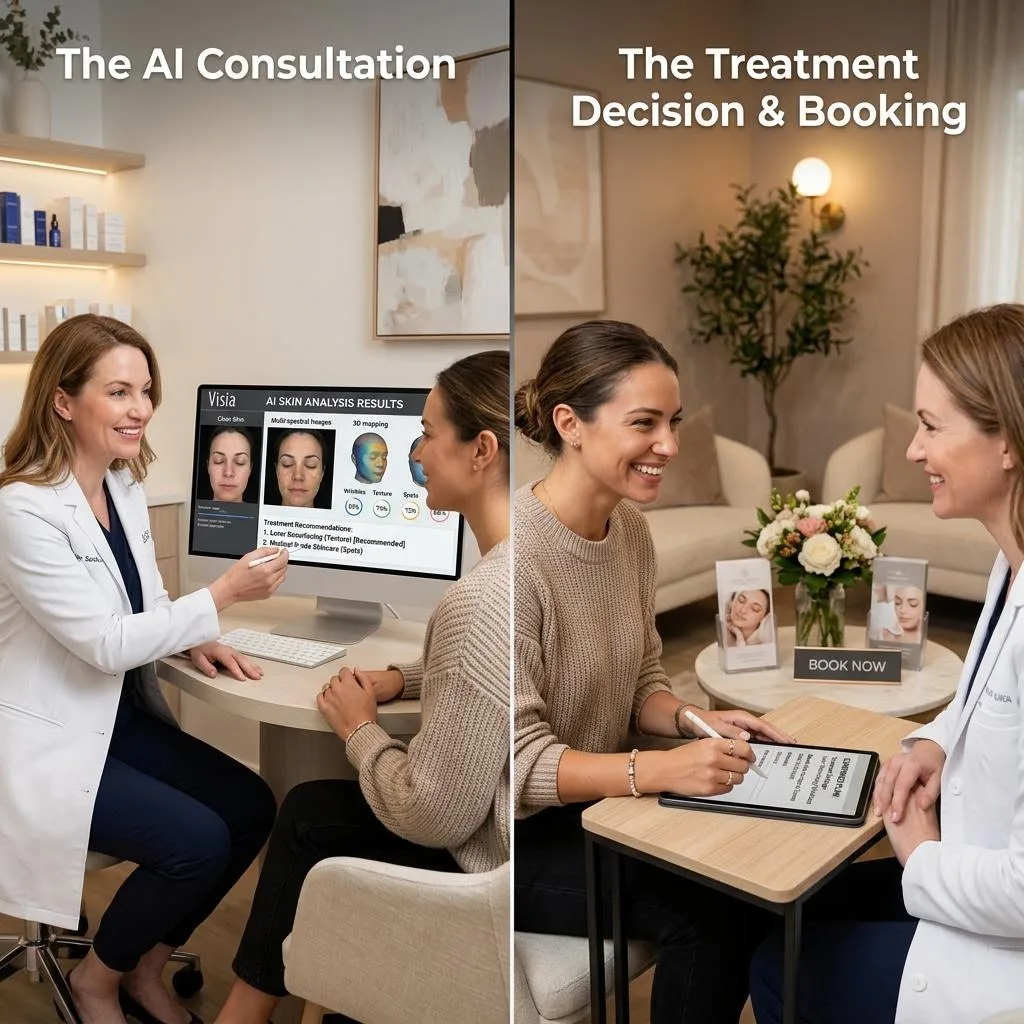
For clinics and medspas, AI skin analysis is a consultation support tool. Its value lies in accelerating trust-building, providing an objective visual basis for treatment recommendations, and enabling longitudinal progress tracking.
Zone-specific analysis over aggregate scoring. A platform reporting “overall skin score: 6.2/10” suits consumer apps. A clinical tool needs to identify where hyperpigmentation is concentrated — T-zone, cheeks, periorbital area — and at what severity, so practitioners can map findings to targeted treatment sites.
Reproducibility under real-world conditions. Progress tracking breaks down if scan-to-scan variability is high. Ask vendors for documented test-retest reliability rates. Perfect Corp reports 95 percent test-retest reliability — treat that as the benchmark.
Treatment recommendation mapping. The platform must allow configuration of which detected conditions trigger which treatments from the clinic’s specific service menu. A generic “laser therapy” flag is not actionable; a mapped recommendation to a named protocol is.
Data storage and longitudinal comparison. Client scan history must be stored and comparable across visits. Platforms that output static PDFs without a database backend are not suitable for clinical use at scale.
For clinics evaluating AI skin analysis platforms, the ProSkinScan clinic demo demonstrates zone-specific analysis, multi-condition detection, and the consultation workflow in a working environment.
Skincare Brands (DTC and Retail)
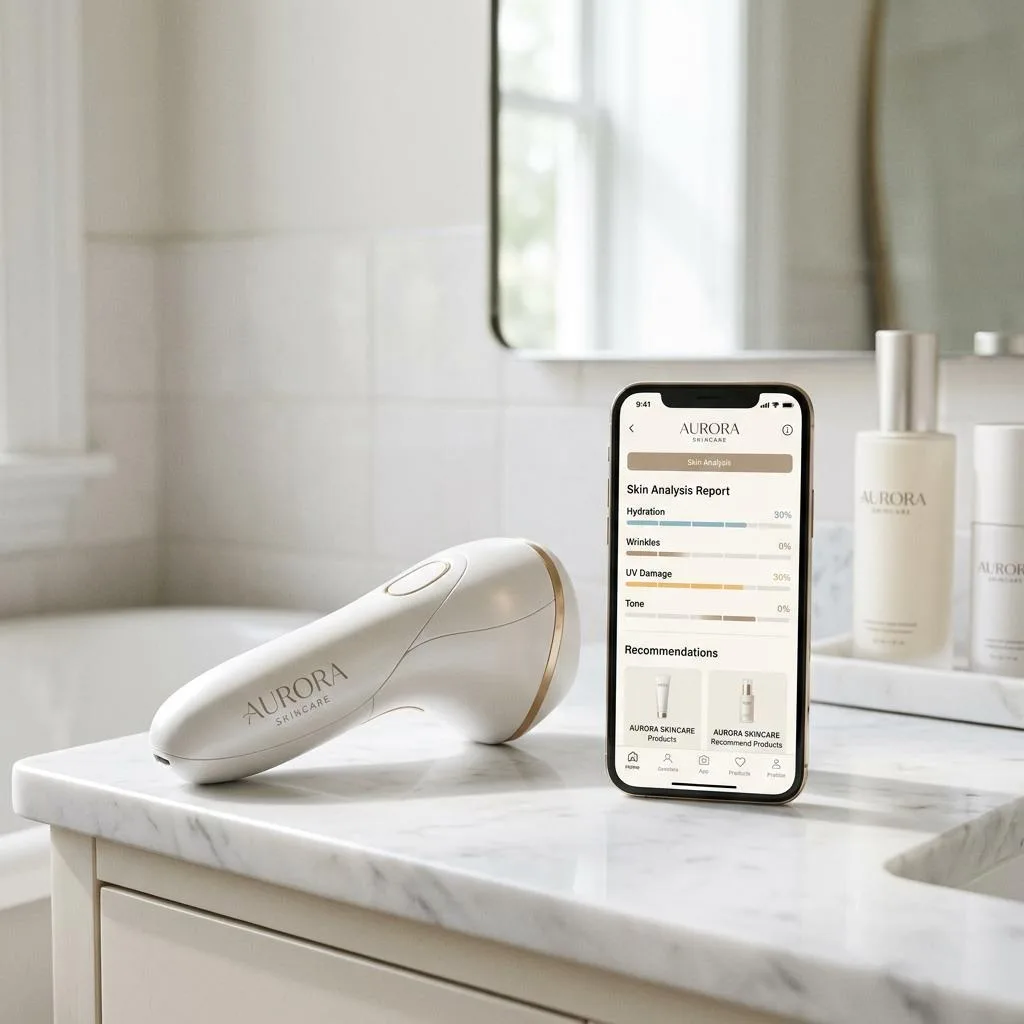
For skincare brands, the goal is product recommendation accuracy and the resulting lift in add-to-cart rates, average order values, and return rates — not consultation support.
SKU-level recommendation integration. When a scan identifies elevated dryness, the output should recommend the brand’s specific ceramide moisturiser — not a generic category. This requires native catalogue mapping or an API that integrates cleanly with the brand’s e-commerce backend.
Consumer experience quality. The analysis result is a consumer-facing product. It must be visually appealing, fast, and easy to understand. A 30-second scan returning a clinical severity-score report will not improve conversion. Output design matters as much as diagnostic accuracy.
White-label and analytics capability. The interface must carry the brand’s identity — logo, colour scheme, recommendation tone. It should also expose conversion event data through native dashboards or API endpoints so the brand can measure actual impact.
The ProSkinScan platform is built for skincare brands with product recommendation mapping, white-label configuration, and e-commerce integration. The brand and manufacturer demo is at app.proskinscan.com.

Cosmetic Manufacturers and R&D Teams
For manufacturers, AI skin analysis is a data collection and efficacy measurement tool, not a consumer product.
Measurement granularity and clinical validity. Manufacturers need scan data to support ingredient efficacy claims. The platform must measure the specific parameters relevant to the claim — transepidermal water loss correlation, melanin concentration scoring, texture coefficient — in a format usable for regulatory documentation.
Batch processing and validated methodology. Clinical trials require batch processing across multiple research sites, standardised protocols, and export formats compatible with research data management systems. The methodology must be disclosed and accuracy claims validated against dermatologist assessment. As noted in Glamar’s vendor analysis, platforms like Haut.AI report 98 percent accuracy trained on over 3 million data points — that level of documented benchmarking is essential for R&D applications.
Marketing Agencies and Beauty Consultants
Agencies need a vendor that works across multiple client types and provides enough flexibility to configure separate implementations per client.
Multi-tenant architecture and integration flexibility. The vendor must support isolated data environments per client, and integration options (REST API, web SDK, mobile SDK) that span different technical stacks — Shopify, custom frontends, mobile apps, kiosk hardware. Commercial flexibility matters too: volume pricing and reseller arrangements that can be scoped to client project budgets.
The Criteria That Apply to Every Business Type
Regardless of business type, five vendor criteria apply universally.
1. Training data volume and diversity. Models trained on a narrow demographic range underperform on others. Ask about dataset size, skin tone diversity, and lighting condition coverage. Reference points from Glamar’s vendor analysis: some providers report training on 3 million+ images. The vendor should articulate their benchmarking methodology, not just cite a headline accuracy figure.
2. Data privacy and security. AI skin analysis involves biometric facial data. The vendor must document where data is stored, retention periods, retraining usage rights, and applicable compliance frameworks — HIPAA for US clinic deployments, GDPR for European markets. Request the data processing agreement before signing anything.
3. Integration method availability. REST API for server-side; web SDK for browser; mobile SDK for iOS/Android. Vendors offering only a hosted widget with no API access limit customisation and lock in your data.
4. Documentation and developer support. Poor documentation is the most common cause of prolonged implementations. Have a technical team member evaluate integration docs independently during the evaluation phase — developer support quality pre-sale predicts post-implementation support.
5. Demo access under realistic conditions. Evaluate output quality with varied inputs: different skin tones, different lighting, different device quality levels. Vendors who restrict demos to controlled conditions are signalling something about real-world performance.
Red Flags in Vendor Evaluation
Accuracy claims without benchmarking methodology. Any vendor citing 99 percent accuracy without disclosing what it was measured against should be pressed before that number influences your decision.
No data processing agreement. If the vendor cannot produce a DPA that specifies storage location, retention period, and retraining usage rights, do not proceed. Non-negotiable for any client-facing deployment.
Required integration is “coming soon.” Get a contractual delivery date or evaluate vendors who already have what you need.
No clients in your vertical. A platform built for consumer e-commerce behaves materially differently from one built for clinical use. Ask for vertical-specific case studies and reference contacts before committing.
Implementation Considerations
Define Use Case
Clinic, brand, manufacturer, or agency
Shortlist Vendors
Score against the criteria above
Request a POC
Test with your own image set
Sign & Roll Out
DPA reviewed, phased deployment
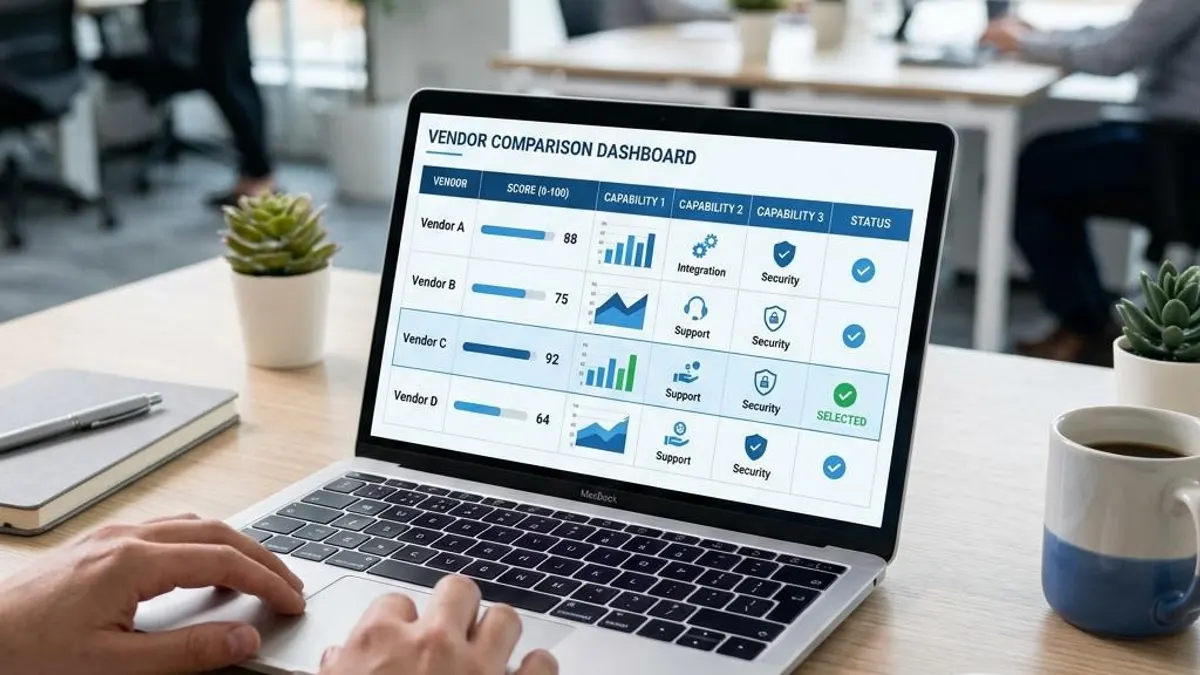
Roll out in phases — one clinic location or one product category on a brand website — before scaling across the full business. This surfaces integration issues and lets you calibrate recommendation mapping before high-volume deployment.
Staff adoption is typically the constraint, not the technology. Practitioners learning to present scan results conversationally, and customer service teams handling scan-related queries, require planned training time that is usually longer than the technical integration itself.
Define success metrics before implementation, not after. For clinics: consultation-to-booking rate before and after rollout. For brands: add-to-cart rate, average order value, and return rate for scanned versus non-scanned sessions. Having these baselines established before go-live is the only way to make a credible business case for expansion.
Pro Tip
Pro Tip: Roll out in phases — one clinic location or one product category on a brand website — so you can measure results with your own data before scaling the deployment across the whole organisation.
Frequently Asked Questions
Q: What is the difference between a skin analysis API and a complete AI skin analysis platform?
An API provides the analytical engine — submit an image, receive condition data. A complete platform adds a configured user interface, data storage, analytics dashboard, recommendation templates, and customer support. APIs offer more flexibility; complete platforms reduce development time and suit teams without in-house technical capability.
Q: How much does an AI skin analysis vendor typically cost?
Pricing models include per-scan API pricing (typically USD 0.05–0.50 per analysis), monthly SaaS subscription tiers based on scan volume, and enterprise licensing for high-volume or multi-brand deployments. Model your projected scan volume against vendor pricing to compare true cost of ownership.
Q: Can one platform serve both a clinic and a skincare brand within the same organisation?
Potentially, if the platform supports distinct configuration environments for each use case. Some platforms, including ProSkinScan, are built for both — the clinic demo is at qderma.proskinscan.com and the brand/manufacturer demo is at app.proskinscan.com.
Q: How long does implementation take?
A basic web SDK integration takes days. A full clinical implementation with CRM integration and staff training typically takes four to eight weeks. Enterprise deployments with custom data pipelines can take three to six months.
Q: What happens to client scan data if I switch vendors?
Before signing, confirm your scan data is exportable in a standard format (JSON, CSV) and that you retain ownership. Some vendor contracts claim retraining rights over client scan data — read the data processing agreement carefully.
Q: How do I evaluate accuracy before purchasing?
Request a proof-of-concept agreement allowing your team to submit a controlled image set with known skin conditions, validated against dermatologist assessment. Do not rely solely on vendor-provided demos.
Q: Is AI skin analysis accurate for darker skin tones?
Quality varies significantly by vendor. Ask for accuracy metrics disaggregated by Fitzpatrick skin type. A platform with strong aggregate accuracy that underperforms on types IV–VI is not suitable for diverse or global market deployments.
Important
Important: Do not rely solely on vendor-provided demos. Vendor testimonials and benchmark pages are curated; insist on piloting the tool with your own images, lighting conditions, and product catalogue before committing.
Where to Start Your Vendor Evaluation
Clarify your primary use case before contacting any vendor. Are you solving a consultation conversion problem? A product recommendation accuracy problem? An ingredient efficacy measurement challenge? That use case determines the criteria, which determines the shortlist.
ProSkinScan serves clinics and skincare brands/manufacturers with purpose-built demos for each audience:
- Aesthetic clinics and medspa operators → evaluate at qderma.proskinscan.com
- Skincare brands, manufacturers, agencies, and consultants → explore at app.proskinscan.com
Start with the demo that matches your use case, and evaluate what you see against your operational context — not the demo environment.